by Steph Curtis-Raleigh – organiser Eco Resort Network
The adventure starts in Zadar in Croatia – where an early morning flight deposits us into a quiet city just waking up. Our cases rattle over the wide pale paving slabs and we stop for a coffee and a pastry in a working men’s bar to get our bearings. Heading towards the water, we admire the monastery and the famous church of St Donatus; which is both strangely square and round, with its separate bell tower. It dates back to the 9th century on the site of a Roman Forum; which explains the partial pillars casually strewn around the square.
We are going to stay on the Island of Žut (pronounced with a soft Z – like Zhivago) in glamping tents for two nights. A highly capable lady called Mia has coordinated our trip, and arranged a boat transfer, which will take roughly an hour.

There is something about being collected by boat which beats every other form of transfer. Rocking along, with the sun glinting on the wake, we see the many small islands of the Kornati archipelago passing by – many featuring one small white house and little else. However, nothing says you have truly arrived more than spotting the large wooden sign saying FEŠTA overlooking the sea and a welcome party on the jetty, including a waiter holding a tray with flutes of prosecco.
Soon we are seated inside the restaurant that Žut is famous for. It is a typical Dalmatian tavern in décor – nets hang from the ceiling, dolls in Croatian dress are propped against one wall. Fešta was founded 26 years ago by the Mudronja family – whose base is on the nearby island of Murter. Kresimir Mudronja runs the restaurant and started waiting on the tables when he was just 14.

Only the drinks trolley, groaning with expensive liquors – Japanese whiskeys and top-end grappa tell of the high-end clientele. Then there are the photos on the wall – Kresimir with Novak Djokovic, Luka Modrić and even Michael Winner among others but touchingly also pictures of his own family; his grandmother and his kids.
He places two mobile phones and a walkie talkie on the table while we speak. Running a world-class restaurant on an island with no water or electricity, where all the staff must live for at least three months at a time is – he says, ‘like running a military operation’.
Beside him sits a young Serbian architecture student – one of two we meet during our stay. Staffing is possibly the biggest headache for Kresimir – he has exacting standards. The multi-million-pound yachts bobbing on their moorings outside contain diners from all over the world who expect the best; from breakfast through to dinner. All the staff we meet are motivated, highly intelligent and able to happily chat in at least three languages.

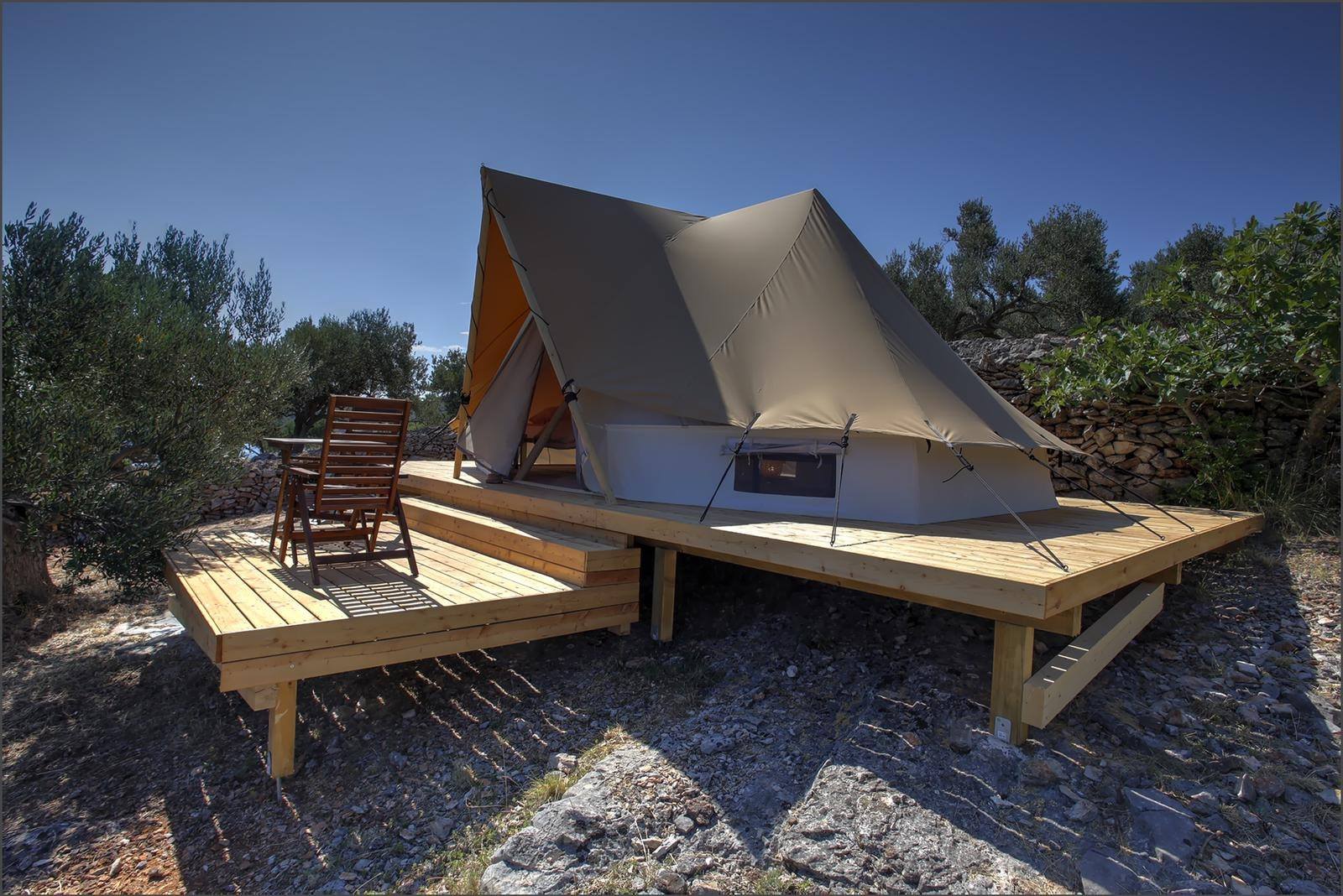
Glamping is a new departure for Kresimir and at present it is limited to just 5 bell tents, provided by Slovenian giant Adria. The plan is to expand the glamping to around 20 tents and land has been bought for the purpose. The tents nestle attractively among the trees in the olive grove beside the restaurant, positioned one above the other on the hill which is parcelled up into sections by low dry-stone walls.
The tents are not lavish but they are simple and comfortable and their low pitches are ideal to protect them from the sea winds and to keep them at the same height are the trees around. It is easy to stand up inside and there’s space to move around. They feature comfortable double beds and electrical hook ups for those who need to charge devices. Bedding and towels are crested with the Fešta logo and there are wooden decks outside with tables and chairs from which guests can appreciate the stunning sea views and curve of the bay.
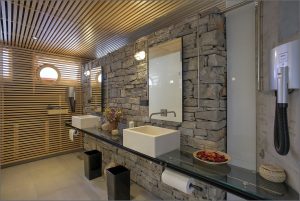
Bathroom facilities are not en-suite but they are very luxurious. Fešta uses a desalination system and guests are given a shower card in order to regulate the amount of water used. Hairdryers are provided, as well as tranquil piped music. It feels like a day spa, housed in a little white building with blue shutters and bourgainvillea all around.
The rest of the outdoor areas are separated into terraces filled with tables, on different levels with shaded areas and flowers all round. White decked seating areas allow guests to sit right on the water’s edge, the perfect location to see the boats come in.
Big, rectangular pots made of the local stone Brač, that were used for olive oil have now been repurposed in many inventive ways – to create table bases, display cases for local produce and tanks for lobsters. We are told that this distinctive stone was used to build the White House in Washington. Yet another strange juxtaposition of simple and luxurious, small and big that we come to understand as a trademark of Fešta.
The history of the land in Žut is an interesting one. The islands were originally the property of the Venetian Court and Kresimir’s ancestors were able to work this land while paying a percentage back to Italy. Then 140 years ago, when the laws governing land ownership changed, the families of Murter bought the islands and drew up a complex contract which still exists today.

“We were farmers and we still are,” says Kresimir – referring to the 350 olive trees that can yield as much as 2,500 litres of oil in a good year. The oil is placed on every table and used in almost every dish. Which leads us to the food – we don’t have to wait long before a waiter arrives with a large platter upon which sits an omelette with white truffles, a waffle with shrimps and avocado, scrambled eggs with wild asparagus and eggs benedict with smoked fish and hollandaise. “This is what we are planning to serve the glampers,” he adds, as our mouths hang open.
I have to be honest, if eating and drinking are not your thing – then there really isn’t a whole lot more to do on Žut. Of course, it’s very pleasant to watch the super yachts glide in and out and it’s always possible to go for a swim (there’s a great kids water assault course too). But the real attraction of a glamping holiday here is learning to do very little at all, except look forward to your next excellent meal and the huge choice of local wines (over 500 varieties stored in a cellar visible beneath one of the outdoor terraces).
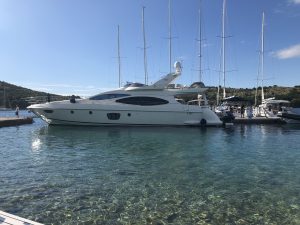
As dusk falls on the island, the moorings are filled with sleek vessels and the skippers and their crews fill the tables indoors and out. The waiters and chefs spring into action and dish after delicious dish arrive on our table. Despite the size of the boats outside, the clientele is not flashy, mostly Germans, Austrians and Italians in jeans and shirts. Around 80 per cent are return visitors who stay a night or two before setting sail once more.
The Glamping season on Žut will follow the restaurant season – finishing around late October when the olives are normally picked and the staff go home. On the 14th and 15th June, Kresimir hosted his second Blue Fish festival – a celebration of the island and of high gastronomy but with an environmental message. There were two gala dinners and two breakfasts, and a few hundred people came to the island to attend, including local politicians. No fewer than 5 Michelin chefs took part, as well as wine and champagne producers.

Žut may only be 15km long but Kresimir wants to make sure that Croatia’s Government feels its influence. “I have grown up on these islands, always being environmentally aware. We do everything we can to lead by example, going plastic-free and trying to reduce our waste, which has to be taken off the island by boat. Yet we receive no concessions, we pay the same for our diesel as everyone else. It took us two years to get a grant for our latest set of solar panels. I want to show those in power what we are doing here – so they understand how important this tourism is to this part of the world and to our guests. We need help with a boat service from the mainland, we need some support!”
The glamping tents were put to good use throughout the festival and bookings are starting to come in; although Booking.com may not be the best conduit. Despite sitting just outside the Kornati National Park, the booking site does not list Žut for those that search for the much better-known Kornati – instead showing other locations that are much further away. Kresimir has asked for this to be changed but little has happened. Luckily, Fešta is now working with World of Glamping run by expert Maja Dimnik, who will put them on the map.
Getting to the island will also be a challenge and will likely involve a surcharge for guests who need a boat transfer – but many would surely be happy to pay for such a great adventure. In the meantime, as Kresimir and team develop the glamping side of the business alongside their world-class restaurant, a wonderful opportunity exists, to be one of just a handful of people who can stay on this magical island and eat the fabulous fish that are brought daily by the local fishermen.

We are thrilled that Kresimir is speaking at the Eco Hotel Summit about operating a world-class, off-grid restaurant.
Following event organiser Steph Curtis-Raleigh’s visit in 2019, her husband Mark had the following review of Glamping Fešta published in The Sunday Times, which can be accessed here